Semi truck accident: who pays?
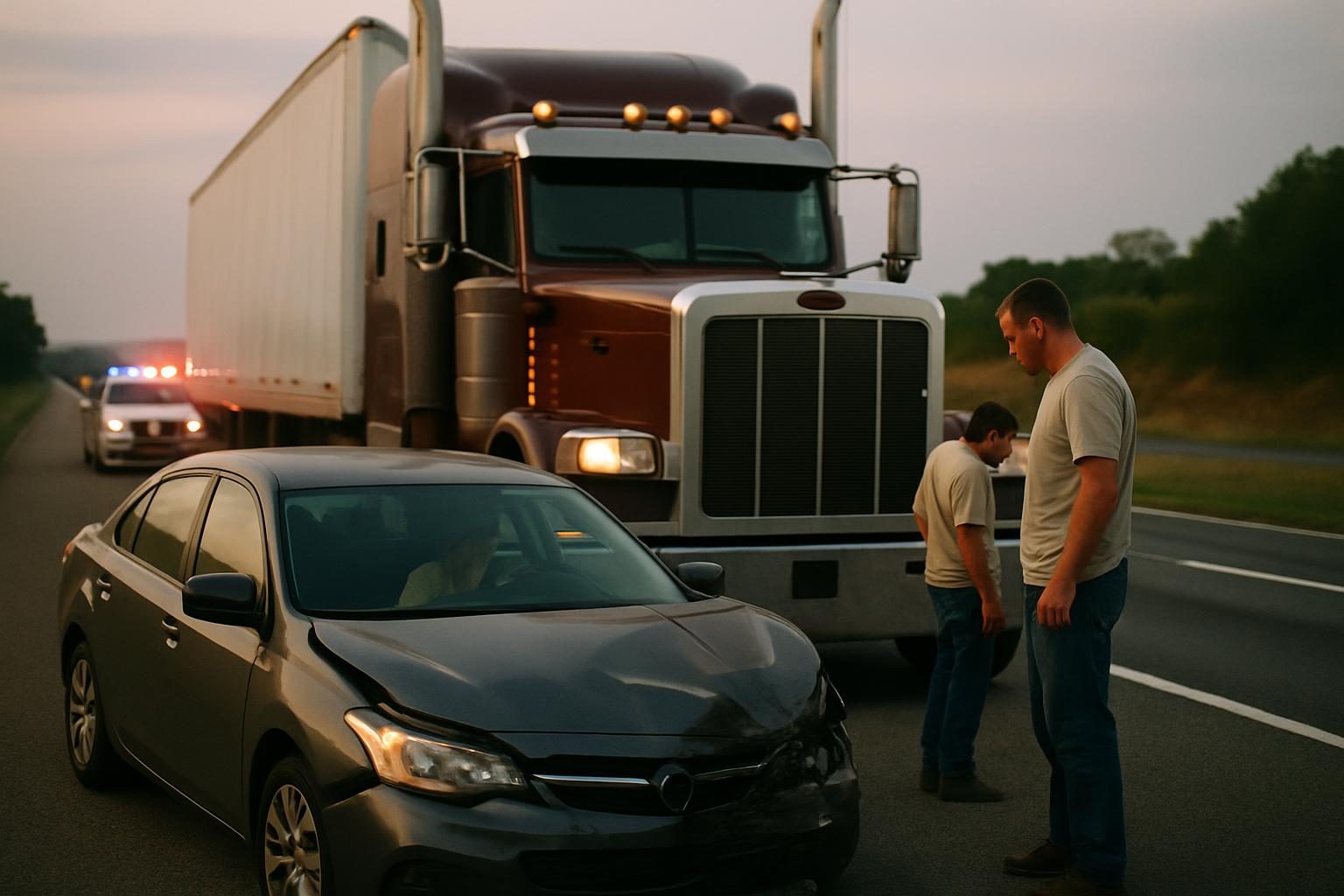
Semi truck accident: who pays, in plain terms
After a semi truck accident, who pays depends on who was at fault and who the driver worked for. In most crashes where the truck driver was negligent, the motor carrier (the trucking company) is responsible, because employers are generally liable for their employees' negligence on the job. Its commercial liability insurance is usually what pays.
Other parties who may share responsibility:
- The driver, personally
- The owner of the truck or trailer, if different from the carrier
- The shipper or loader, if cargo was overloaded or badly secured
- A maintenance company that did faulty brake or tire work
- A manufacturer of a defective part
- A government agency, if road design or maintenance played a role (short notice deadlines apply)
How much insurance trucks must carry
Federal rules (49 CFR 387.9) set minimum liability coverage for for-hire carriers operating vehicles of 10,001 pounds or more in interstate commerce:
- $750,000 for general (non-hazardous) freight
- $1,000,000 for oil and certain other hazardous materials
- $5,000,000 for certain high-risk hazardous materials
These are minimums; many carriers carry more, including excess or umbrella policies. Trucks that operate only within one state may be subject to lower state minimums. A carrier's federal registration and insurance filing can be looked up using its USDOT number, usually painted on the cab door.
For carriers that cross state lines, you can usually confirm the company's registration and insurance filing through the FMCSA's public records.
Ask about your situation
Type your question the way you'd say it. Free, no sign-up, and we never ask for your name.
See injury lawyers near youFederal safety rules that can prove fault
Truck drivers and carriers must follow Federal Motor Carrier Safety Administration rules. Violations can be strong evidence of negligence. For example, property-carrying drivers may drive a maximum of 11 hours after 10 consecutive hours off duty, may not drive beyond the 14th hour after coming on duty, and must take a 30-minute break after 8 cumulative hours of driving.
Key evidence includes electronic logging device (ELD) records, the truck's engine data, dashcam video, the driver's qualification file, drug and alcohol test results, and maintenance records. Carriers are required to keep drivers' hours-of-service records for only 6 months, so a written request to preserve evidence should be sent quickly.
Your own insurance after a truck crash
While fault is investigated, your own coverage may help:
- PIP pays first for medical bills in no-fault states.
- MedPay can cover medical bills regardless of fault.
- Collision covers your car, and your insurer may seek repayment from the trucking company.
- Underinsured motorist coverage can help if damages exceed the truck's coverage.
Health insurance can pay bills now, but it may seek repayment from any settlement.
Why truck accident claims differ from car crash claims
Truck crashes usually involve more insurance, more parties and more evidence than ordinary car crashes. A semi truck can weigh many times more than a passenger car, so injuries are often severe and damages can exceed the at-fault party's coverage. Trucking companies and their insurers often have rapid-response teams that gather evidence soon after a crash.
Several policies may apply at once: the carrier's primary liability policy, an excess policy, the trailer owner's policy, and a shipper's or maintenance company's coverage. Sorting out which policy pays first can take time, and that is one reason truck cases tend to take longer to settle.
What to do after a semi truck accident
- Call 911 and get medical care. Truck crashes often cause serious injuries.
- Photograph the truck, trailer, USDOT number, company name, plates and the scene.
- Get the driver's name, employer and insurance information, plus witness contacts.
- Get the police report number.
- Don't give a recorded statement to the trucking company's insurer; carriers often send investigators quickly.
- Keep all bills and records of missed work.
Because of the evidence deadlines and multiple parties, many people speak with an injury lawyer early. injurylawyers.si can list injury law firms near your ZIP code. The deadline to sue is your state's statute of limitations, commonly 2 or 3 years. This is general information, not legal advice.
Common questions
Is the trucking company liable if the driver is an independent contractor?
Often yes, at least in part. Federal rules make the carrier whose operating authority the truck runs under responsible for the operation in many situations, but the details depend on the lease and state law.
What is the minimum insurance for a semi truck?
For interstate for-hire carriers of general freight, the federal minimum is $750,000. It is $1 million for oil and some hazardous materials and $5 million for certain high-risk hazardous materials.
How do I find a trucking company's insurance?
Get the USDOT number from the truck door or police report and look up the carrier in the FMCSA's public registration and insurance records.
How long do I have to file a truck accident lawsuit?
It is your state's personal injury deadline, which ranges from 1 to 6 years and is 2 or 3 years in most states. Claims involving government vehicles or roads have shorter notice deadlines.